Bridge
Grow your YouTube channel through collaboration.
How do you HELP GROW 100k YouTube channelS?
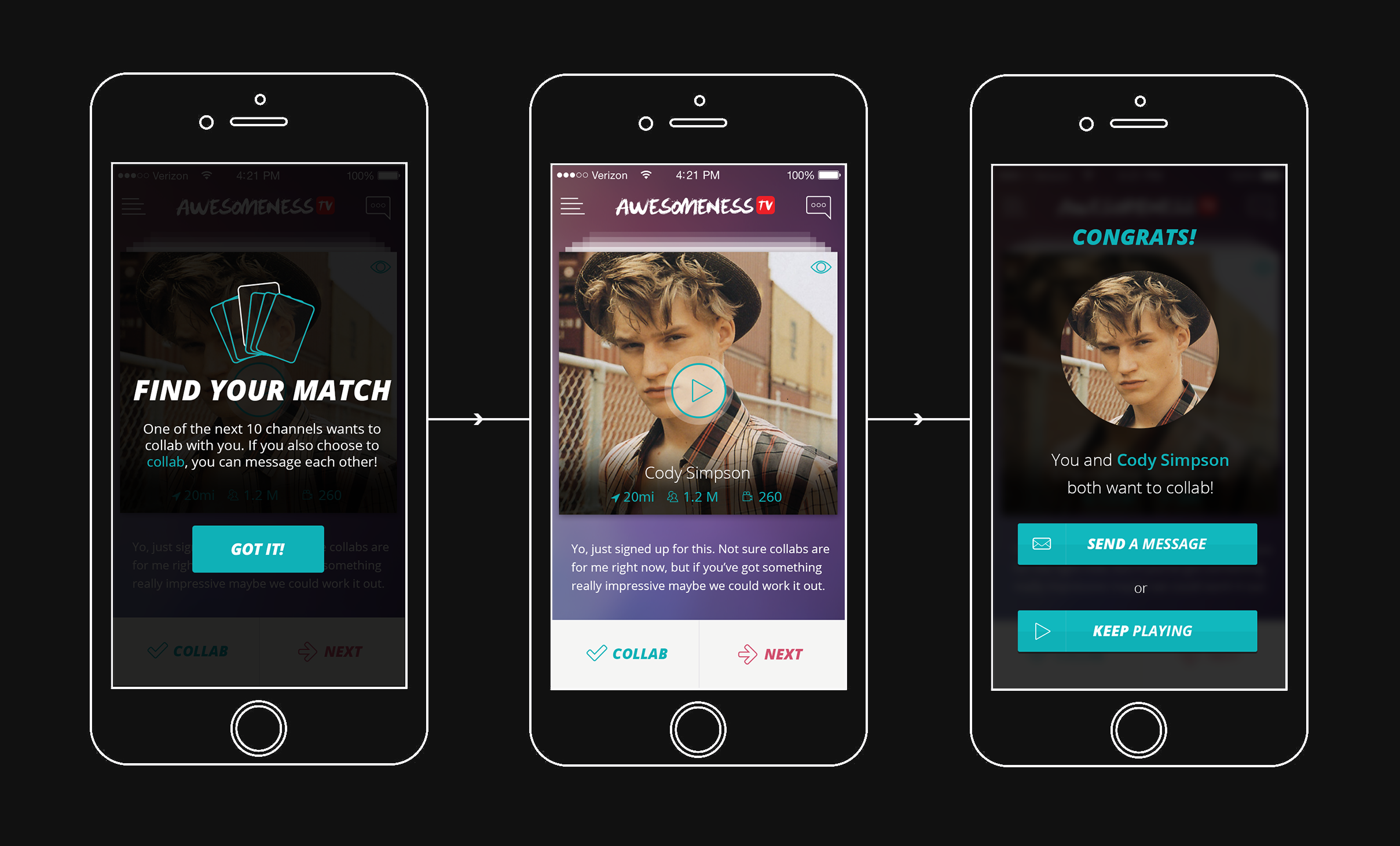
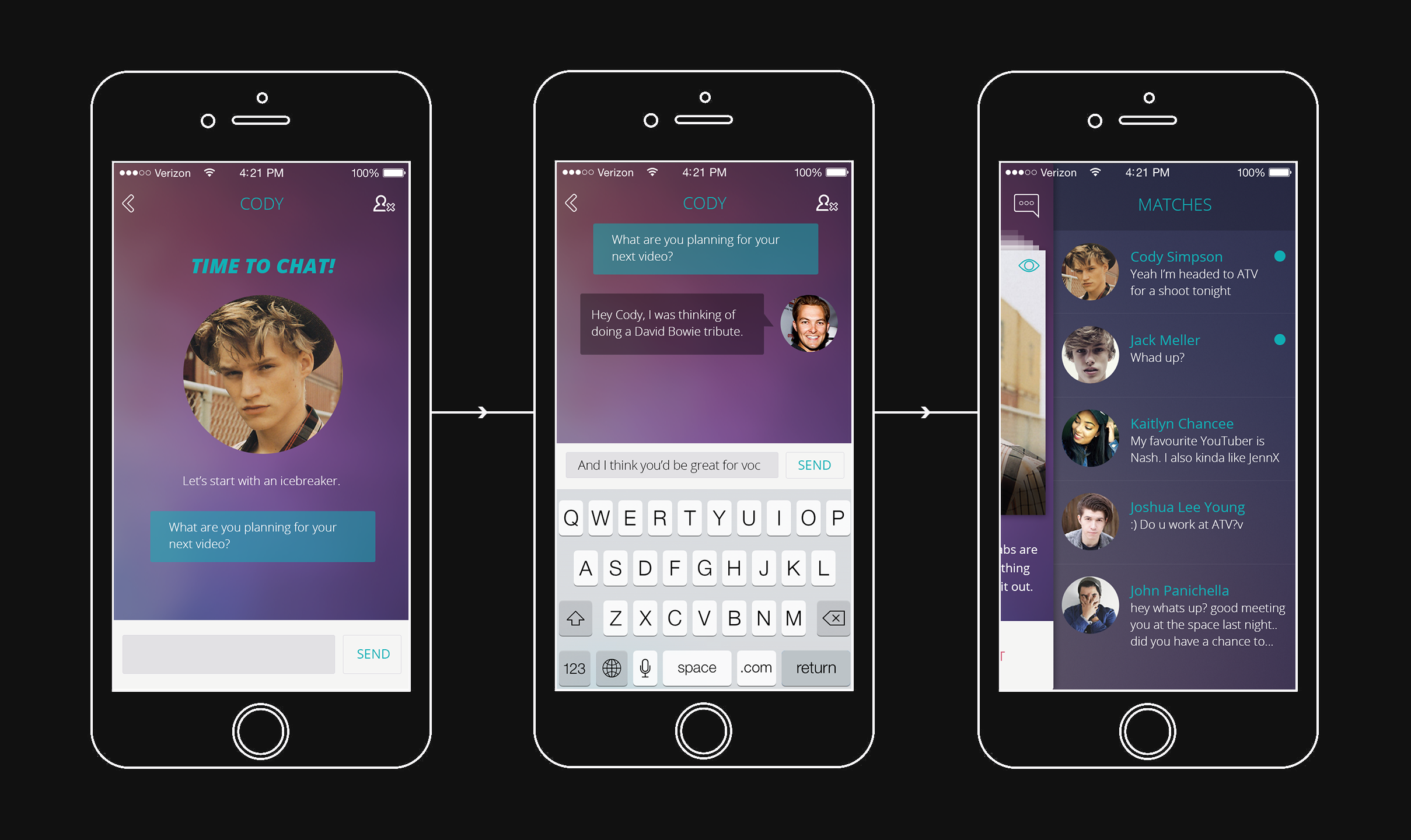
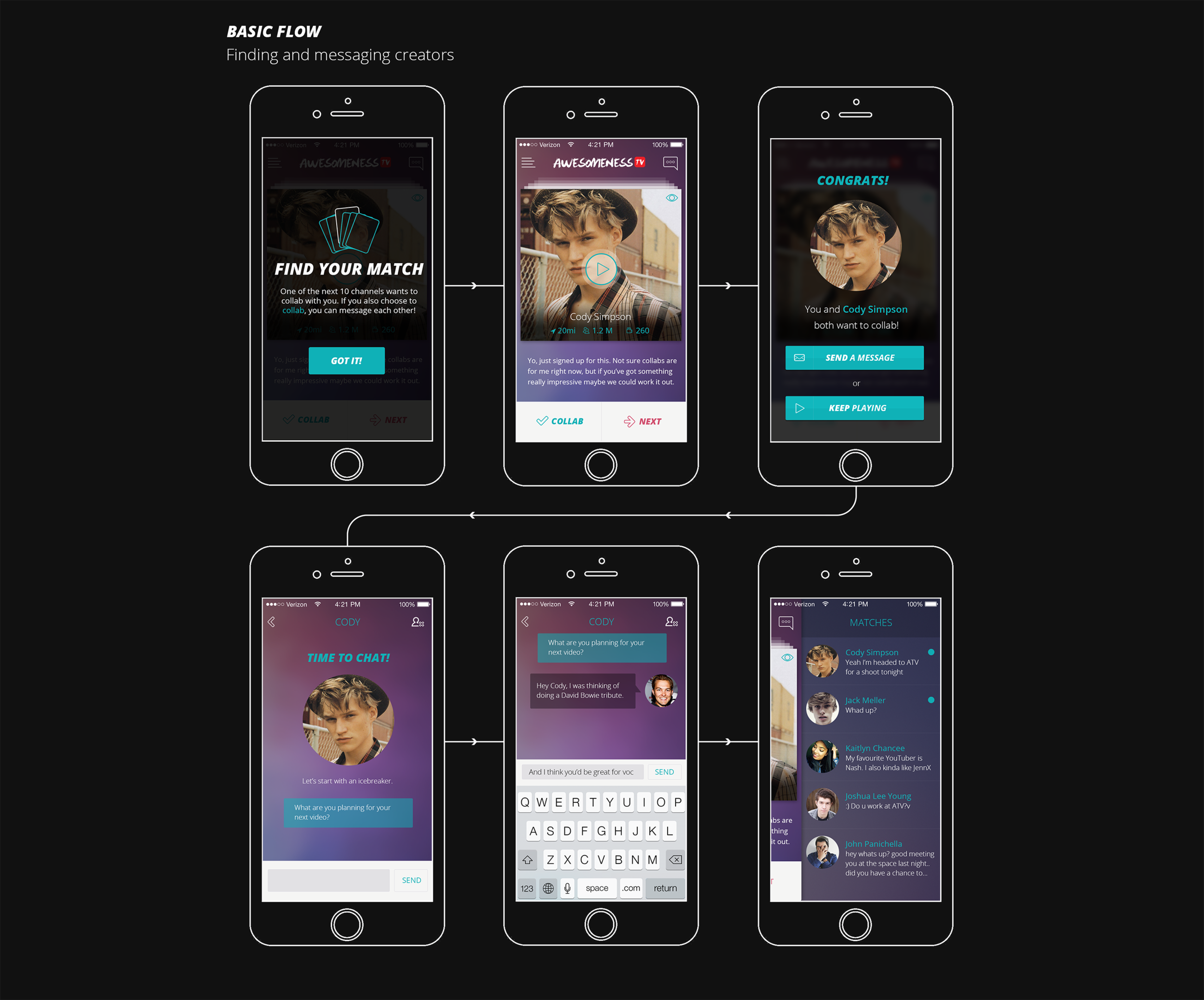
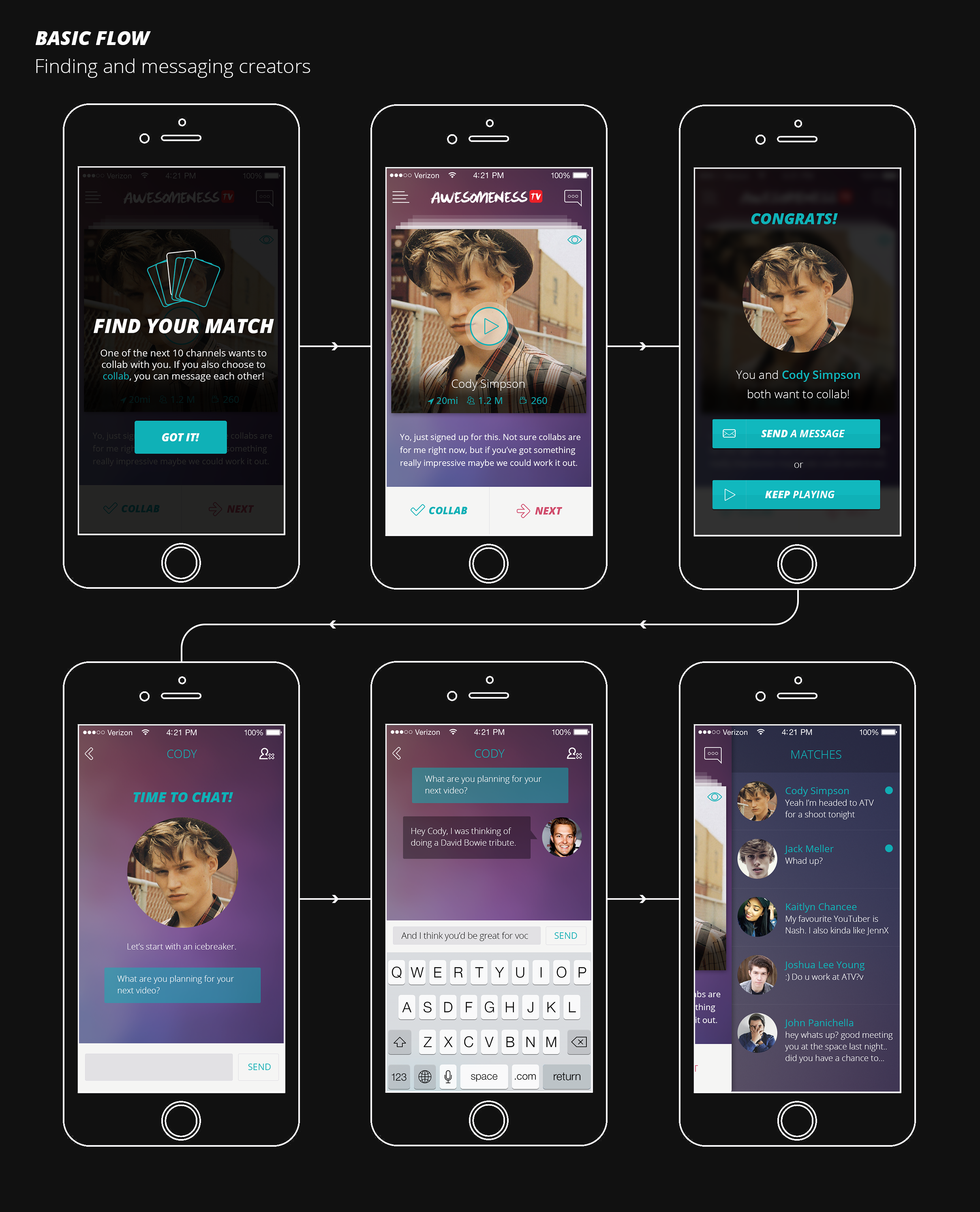
I asked myself this question every day at AwesomenessTV. Until Bridge, I did not have a good answer. Bridge played to our strengths as a global YouTube network. With a view into where creators lived and what kind of content they made, we could present them with the best possibilities for collaborations. Video collaboration is an essential but difficult to accomplish component of YouTube growth strategy. Bridge made this easy for creators and resulted in thousands of YouTube collaborations. It was the result of many hours of user research combined with relentless adherence to the scientific method.
Bridge was a mobile web, iOS and Android app. My role in Bridge was co-designer, UX researcher and product owner.
From the beginning, I was responsible for building the multi-channel network. It grew faster and bigger than I could have ever dreamed. By the second month, we were adding 1k+ channels (creators) a day to the network. Our value proposition was simply that we would make you a star. This resonated with a lot of small and nascent YouTube creators. However, we were in danger of breaking our promise unless we could actually help the creators grow en masse.
So I put my technical hat on and recruited software developers from Dreamworks (the ink was barely dry on the acquisition) and hired Pivotal Labs. We built a music library and creator dashboard. These helped us acquire more users, but did not meaningfully affect creator growth.
From my days at YouTube and working with creators at Awesomeness, I knew collaboration was important for creator growth. It's the only sure-fire method to grow your audience without spending money on advertising your channel. Creators, especially those outside of major metropolitan hubs, struggle to find people to collaborate with. If they're lucky, they will attend a YouTube conference like VidCon. So, here was an opportunity we were uniquely positioned for because we had many creators and their data.
Before a developer writes a single line of code, I believe it is important to test major assumptions. Here were our major assumptions with Bridge:
- Creators want to collaborate
- Creators want to collaborate with other AwesomenessTV networkers.
- Connecting creators leads to collaboration
- Proximity affects the likelihood of collaboration
- Channel size affects the likelihood of collaboration
- Content category affects the likelihood of collaboration
Our first test was simply an email. We asked creators to opt-in to a collaboration program. About half of the test group opted in. We felt good about proceeding to the next test. The next test was simply an email prototype. We emailed creators five different channels to collaborate with. They would respond with the ones they wanted to collaborate with. It was a manual process on our end, but provide invaluable data before we started any development. We experimented with the five choices so that we could determine the importance of category, size and proximity. This led to the beginning or our suggestion algorithm.
Not only did we have helpful data on user behavior, but we also had actual users. I believe it is better to build technology when users push you to do so and you can no longer manually serve them. This way you are simply scaling and improving existing process. We added users to our email prototype until we could not handle any more and then we built an app on iOS, Android and mobile web.
Bridge in the news: